The less you use (of everything) equals less that needs to be produced … and that reduces our footprint on the earth.
With that in mind, here’s a great tip, compliments of Chef Paul Prudhomme. Instead of pouring cooking oil into the pan before adding the other food (vegetables, meat, etc.), drizzle a little oil on the food itself, mix it up, then toss it into a dry pan. You’ll still get the benefits and flavor of the oil but you’ll use a lot less. And hey … not only will you be saving the earth; you’ll get fewer calories in your food. Thanks, Chef Paul.
As always, I would love to hear your ideas for reducing, reusing and recycling. Just click on the comments link, located at the bottom of each post, and let me know what you think and how you conserve. Maybe you'll see your ideas in an upcoming post.
Showing posts with label Use Less. Show all posts
Showing posts with label Use Less. Show all posts
Wednesday, May 20, 2009
Wednesday, March 4, 2009
It's the small things that count ...
There is a wonderful green site called "Our Green Year". On day 295 of the authors' green journey, they gave up bubble gum. Yep ... bubble gum. They explained that the ingredients probably weren't fair trade, organic, healthy or Eco-friendly and that the packaging was ... well ... over the top. Bubble gum is waste with a capital "W".

That got me thinking about all the small packages that we come across ... those tiny packets of sugar, salt, pepper, ketchup, mustard, seeds, tea, tissue, sewing materials, etc., etc.
Remember when restaurants put a container of sugar on the table for patrons to use at their discretion? Many restaurants now use a container of various sweetener packets ... each individual packet holding a pre-measured amount of sweetener.

How about fast food restaurants? When you want some ketchup with those fries, you'll probably be given little, individual ... yep, you guessed it ... packets.
It doesn't end with restaurants. There are many stores that promote buying items in large quantities to save money. The basic concept of buying in bulk is great ... unless those items are individually wrapped, then wrapped together, then boxed or covered with plastic.

For example ... go to one of the warehouse type stores (I won't mention them here) and you're sure to find toilet paper with each roll individually wrapped or a few rolls wrapped together and then put in a huge plastic bag together with other "groups" of wrapped up rolls. It's a lot of waste and turns "buying in bulk" into mere "bulk".
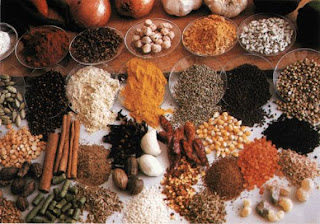
So, today's tip is easy. Pay close attention to the items you buy and the things you use. If the item comes in small packets, see if there is a different option. For example, instead of buying spices in individual, one meal packets ... buy large containers of the mix or ... make your own (there are recipes for almost every spice blend on the Internet).

If you have a choice at a restaurant, choose the sugar, salt, etc., that comes in a container rather than a packet.
Are you taking fast food home? Use the ketchup you have at home instead of the small packets.
Put together your own sewing kit instead of buying those small, match-book kits.
Good things may come in small packages ... but they are just as good in bulk ... and there is a lot less waste. It's a small thing ... but it counts!
As always ... I would love to hear from you.

That got me thinking about all the small packages that we come across ... those tiny packets of sugar, salt, pepper, ketchup, mustard, seeds, tea, tissue, sewing materials, etc., etc.
Remember when restaurants put a container of sugar on the table for patrons to use at their discretion? Many restaurants now use a container of various sweetener packets ... each individual packet holding a pre-measured amount of sweetener.

How about fast food restaurants? When you want some ketchup with those fries, you'll probably be given little, individual ... yep, you guessed it ... packets.
It doesn't end with restaurants. There are many stores that promote buying items in large quantities to save money. The basic concept of buying in bulk is great ... unless those items are individually wrapped, then wrapped together, then boxed or covered with plastic.

For example ... go to one of the warehouse type stores (I won't mention them here) and you're sure to find toilet paper with each roll individually wrapped or a few rolls wrapped together and then put in a huge plastic bag together with other "groups" of wrapped up rolls. It's a lot of waste and turns "buying in bulk" into mere "bulk".

So, today's tip is easy. Pay close attention to the items you buy and the things you use. If the item comes in small packets, see if there is a different option. For example, instead of buying spices in individual, one meal packets ... buy large containers of the mix or ... make your own (there are recipes for almost every spice blend on the Internet).

If you have a choice at a restaurant, choose the sugar, salt, etc., that comes in a container rather than a packet.
Are you taking fast food home? Use the ketchup you have at home instead of the small packets.
Put together your own sewing kit instead of buying those small, match-book kits.
Good things may come in small packages ... but they are just as good in bulk ... and there is a lot less waste. It's a small thing ... but it counts!
As always ... I would love to hear from you.
Monday, December 15, 2008
Sharing ... and a green life
I've been thinking about the concept of sharing. As children, we were taught to share our toys. As adults, we are encouraged to share what we have with those less fortunate. We share our opinions in surveys, our time through volunteering, and our thoughts by blogging. Whether it is a learned idea or something inherent in our genes, the fact is that we share.
When it comes to green living, a little sharing goes a long way towards a healthier environment. Here are a few ideas:
 Carpooling and ride sharing - We all know that cars pollute. So it only makes sense to reduce the number of cars on the road. Less cars ... less pollution. One way to do this is through carpooling. It's easy to get started ... check with co-workers to see who lives close (being on the same schedule helps but, if one is a little flexible, slightly different schedules can also work ... or ask your employer about adjusting your hours to accommodate carpooling). Organize shopping trips with neighbors. Craigslist has a "rideshare" category where one can post trips, either looking for riders or needing a ride. In addition to helping the planet, carpooling is cost effective. Where there are rotating drivers, there is less wear and tear on one's vehicle. If one chooses to drive and offer rides instead, the riders usually help with the cost of gas. And ... imagine the opportunity to have lively discussions while commuting.
Car Sharing - In Washington state there is a beautiful place called Stehekin which is at the end of Lake Chelan, a 55-mile long, glacier fed lake. Stehekin is remote ... the only way to get there is by water craft or a long, long hike. When I visited (years ago), the first thing that I noticed was the lineup of several cars. This seemed strange since there are no roads leading out of Stehekin. There are, however, roads in the area leading to cabins and private little hideaways. So, the residents share cars ... with each other and with guests. Each car is parked near the dock with the keys inside (and the doors unlocked). When one arrives off a boat, they can choose a car and drive it. When they leave, the car is left at the dock for the next user ... with a full tank. This idea has taken on new interest in many cities throughout the world. There are car sharing groups popping up everywhere. The idea is that, without owning a car, a car is available whenever one needs it. They are parked throughout a city and members use one whenever it's available. It's a brilliant way to share a car, cut down on pollution and ... cut down on the costs associated with owning a car. Here are a couple of sites to check out for more information: http://www.carsharing.net/ and http://www.zipcar.com/. For additional resources search the Internet for "car sharing".
 Living Space - On this site, we usually think of "footprint" as our carbon footprint. But what about our actual footprint ... the actual amount of ground that we live on. With populations throughout the world soaring ... we are using more and more land for housing. Trees are being cut ... aquifers are being covered up and polluted ... and animals are becoming extinct as they run out of habitat. Sharing living space reduces our footprint. This isn't a new concept ... for years, it was traditional for more than one generation of a family to occupy the same home. So, if you find yourself looking for new "digs", consider an apartment or a condo. If living in a large house is your pleasure, consider renting out rooms or some portion of the home not in use. More people in one space is a good thing!
Office Supplies - Do you work in an office ... or are you the owner of a business? Consider cutting back on the amount of office supplies purchased and ask employees to share them. For example ... is it really necessary for each person to have a stapler or scissors? Can people share computers and paper shredders? How about sharing trash cans and recycle bins? If one looks around, I'm sure there are all kinds of office supplies which could be shared. And the less stuff we buy and use ... the less stuff gets tossed out.
Showers - Save water by showering with a friend. :) Planning to build a house ... instead of one bathroom for each room, put one between rooms.

Share the road - Here's an easy one ... share the road with bicyclists. Encourage this pollution free mode of transportation by slowing down and giving them plenty of room. And if you have a bicycle ... see if there are times when you can use it instead of driving a car.
Clothes - As kids, it seemed natural to share clothes. Usable clothing was handed down from older siblings to younger ones ... sisters shared wardrobes ... and friends often traded outfits. As adults, we can continue sharing clothes. Many items are unisex ... couples can share T-shirts and sweat shirts/pants. Dads and sons are often about the same size ... so share jeans, shirts and even shoes. The idea, here, is to share what's in your closet with others living in your house ... you'll increase your wardrobe without spending a cent or adding more stuff to the mix.
Donate - Here I'm talking about donating usable items which you no longer want or need. Rather than toss them out, take them to the nearest thrift store, shelter or Good Will. And while we're at it, before shopping for something new, consider buying previously used items.
Toothbrushes - before you get grossed out, I'm talking about battery operated or electric toothbrushes ... and not the manual kind. Why have one device for each person? Simply buy a supply of heads ... each person has their own but uses one electronic device. It'll give you all a brilliant smile!
Electronics - Advertisers would have you believe that each and every person in your house needs their own TV, computer, phone, radio, etc. That's a lot of stuff ... good for them but not so good for the environment. So ... rather than equip each room with the latest and greatest ... and never seeing the occupant again ... consider sharing electronics.

Pass it on - And finally, the best way to share is to pass on the "green" word. Share your ideas, your experiences, what works and what doesn't ... share tips, hints and advice. The world will be a better place for it.
Sharing ... who knew it was so "green".
As always ... I'd love to hear from you!
When it comes to green living, a little sharing goes a long way towards a healthier environment. Here are a few ideas:
 Carpooling and ride sharing - We all know that cars pollute. So it only makes sense to reduce the number of cars on the road. Less cars ... less pollution. One way to do this is through carpooling. It's easy to get started ... check with co-workers to see who lives close (being on the same schedule helps but, if one is a little flexible, slightly different schedules can also work ... or ask your employer about adjusting your hours to accommodate carpooling). Organize shopping trips with neighbors. Craigslist has a "rideshare" category where one can post trips, either looking for riders or needing a ride. In addition to helping the planet, carpooling is cost effective. Where there are rotating drivers, there is less wear and tear on one's vehicle. If one chooses to drive and offer rides instead, the riders usually help with the cost of gas. And ... imagine the opportunity to have lively discussions while commuting.
Car Sharing - In Washington state there is a beautiful place called Stehekin which is at the end of Lake Chelan, a 55-mile long, glacier fed lake. Stehekin is remote ... the only way to get there is by water craft or a long, long hike. When I visited (years ago), the first thing that I noticed was the lineup of several cars. This seemed strange since there are no roads leading out of Stehekin. There are, however, roads in the area leading to cabins and private little hideaways. So, the residents share cars ... with each other and with guests. Each car is parked near the dock with the keys inside (and the doors unlocked). When one arrives off a boat, they can choose a car and drive it. When they leave, the car is left at the dock for the next user ... with a full tank. This idea has taken on new interest in many cities throughout the world. There are car sharing groups popping up everywhere. The idea is that, without owning a car, a car is available whenever one needs it. They are parked throughout a city and members use one whenever it's available. It's a brilliant way to share a car, cut down on pollution and ... cut down on the costs associated with owning a car. Here are a couple of sites to check out for more information: http://www.carsharing.net/ and http://www.zipcar.com/. For additional resources search the Internet for "car sharing".
 Living Space - On this site, we usually think of "footprint" as our carbon footprint. But what about our actual footprint ... the actual amount of ground that we live on. With populations throughout the world soaring ... we are using more and more land for housing. Trees are being cut ... aquifers are being covered up and polluted ... and animals are becoming extinct as they run out of habitat. Sharing living space reduces our footprint. This isn't a new concept ... for years, it was traditional for more than one generation of a family to occupy the same home. So, if you find yourself looking for new "digs", consider an apartment or a condo. If living in a large house is your pleasure, consider renting out rooms or some portion of the home not in use. More people in one space is a good thing!
Office Supplies - Do you work in an office ... or are you the owner of a business? Consider cutting back on the amount of office supplies purchased and ask employees to share them. For example ... is it really necessary for each person to have a stapler or scissors? Can people share computers and paper shredders? How about sharing trash cans and recycle bins? If one looks around, I'm sure there are all kinds of office supplies which could be shared. And the less stuff we buy and use ... the less stuff gets tossed out.
Showers - Save water by showering with a friend. :) Planning to build a house ... instead of one bathroom for each room, put one between rooms.

Share the road - Here's an easy one ... share the road with bicyclists. Encourage this pollution free mode of transportation by slowing down and giving them plenty of room. And if you have a bicycle ... see if there are times when you can use it instead of driving a car.
Clothes - As kids, it seemed natural to share clothes. Usable clothing was handed down from older siblings to younger ones ... sisters shared wardrobes ... and friends often traded outfits. As adults, we can continue sharing clothes. Many items are unisex ... couples can share T-shirts and sweat shirts/pants. Dads and sons are often about the same size ... so share jeans, shirts and even shoes. The idea, here, is to share what's in your closet with others living in your house ... you'll increase your wardrobe without spending a cent or adding more stuff to the mix.
Donate - Here I'm talking about donating usable items which you no longer want or need. Rather than toss them out, take them to the nearest thrift store, shelter or Good Will. And while we're at it, before shopping for something new, consider buying previously used items.
Toothbrushes - before you get grossed out, I'm talking about battery operated or electric toothbrushes ... and not the manual kind. Why have one device for each person? Simply buy a supply of heads ... each person has their own but uses one electronic device. It'll give you all a brilliant smile!
Electronics - Advertisers would have you believe that each and every person in your house needs their own TV, computer, phone, radio, etc. That's a lot of stuff ... good for them but not so good for the environment. So ... rather than equip each room with the latest and greatest ... and never seeing the occupant again ... consider sharing electronics.

Pass it on - And finally, the best way to share is to pass on the "green" word. Share your ideas, your experiences, what works and what doesn't ... share tips, hints and advice. The world will be a better place for it.
Sharing ... who knew it was so "green".
As always ... I'd love to hear from you!
Wednesday, December 3, 2008
Food ... Glorious Food
Recently, to kick off the holiday season, we watched "A Christmas Carol". I love the scene where Scrooge comes out of his bedroom to find the Ghost of Christmas Present sitting atop a bountiful table of delicious food. This scene seems to represent everything we hold dear ... a table with plenty ... a generous and happy spirit ... the very essence of human kindness. In homes around the world, we try to recreate that opulence and generosity ... offering our guests much more than they could ever consume. And what is left over often becomes landfill waste.
As landfill contributions go, I've always thought that food would be less imposing than other items. After all, it will compost down and ultimately enrich the soil, right? Unfortunately ... there are problems with this thinking. To maximize the space used for landfills, the trash is compacted before being buried in the soil. These tidy bricks of garbage are air tight ... preventing decomposition. Simply put, the process of composting requires air. No air ... no compost. For landfills which allow organic materials to compost, there's another problem. We simply have too much waste. According to the EPA, methane (the gas produced by food waste) traps 23 times as much heat in the atmosphere as the same amount of CO2. Landfills account for 34 percent of all methane emissions in the U.S.
So ... how do we prevent food waste? I'm glad you asked. Here are some ideas:
As always ... I would love to hear from you!
As landfill contributions go, I've always thought that food would be less imposing than other items. After all, it will compost down and ultimately enrich the soil, right? Unfortunately ... there are problems with this thinking. To maximize the space used for landfills, the trash is compacted before being buried in the soil. These tidy bricks of garbage are air tight ... preventing decomposition. Simply put, the process of composting requires air. No air ... no compost. For landfills which allow organic materials to compost, there's another problem. We simply have too much waste. According to the EPA, methane (the gas produced by food waste) traps 23 times as much heat in the atmosphere as the same amount of CO2. Landfills account for 34 percent of all methane emissions in the U.S.
So ... how do we prevent food waste? I'm glad you asked. Here are some ideas:
-
Planning a party? When entertaining, consider sending leftovers home with guests.
Plan ahead ... twice. When I shop, I have an idea of what I'd like to cook during the week. This ensures that I have a use for everything ... and if I stick to my plan, everything gets used. But what happens when that dish that sounded oh so great at the beginning of the week, sounds less than appetizing today? That's where planning ahead twice comes in. Be sure that for every item purchased, an alternate dish is considered.
-
Don't shop hungry ... and bring a list. Grocery stores are in the business of selling. They plan out their displays to entice us. And who can resist that box of donuts when their stomach is growling. So eat before shopping and make up a list ... it'll help avoid any impulse buying.
-
Buy local produce. Have you ever purchased a bag of produce at a supermarket chain, just to get it home and find that there are rotten items at the bottom of the bag? Or how about those lovely tomatoes ... grown halfway around the world ... that are black inside? Produce in big chain supermarkets is older and typically isn't handled with care, causing many items to become bruised or broken which speeds up the decaying process. Buying produce locally ensures that the item is fresh ... which means less waste.
-
Buying in bulk saves money and lessens the amount of packaging that gets sent to the landfill. However, one must use caution when buying large quantities. Ensure that the item being purchased has an adequate "use by" date. Also, make sure that the item is something you'll actually use. Most items, regardless of their shelf life, will get tossed out if, after a year or so, they haven't been used up.
-
Store foods properly. If the food you purchase doesn't come with storage instructions, check out the Internet. Storing food properly will ensure it's maximum shelf life and safety ... not to mention it's taste.
-
Check your refrigerator ... and your pantry. Adopt the grocer's strategy and rotate. Foods that are out of sight, usually get forgotten. Browse the contents of your food storage areas often ... at least once a week. You'll remind yourself what's there and you can move forgotten items to the front where they'll get used instead of turning into fuzzy, green stuff.
-
Use what you have before shopping for more. In our house, we have fun with this. We try to use almost everything before making another shopping trip and this has generated some very creative meals.
-
Cook only what is needed. If you're cooking for two and the recipe is for eight ... cut it down. Even if your family adores leftovers, there comes a point when everyone is tired of the same old thing.
-
Don't toss out bits and pieces. You know the ones ... that last piece of bread in the package ... the crumpled chips at the bottom of the bag ... the peelings from the carrot you had at lunch. These things can be re-purposed. Save pieces of bread to make your own bread crumbs or take them to a park and feed the ducks. Crushed chips are great for topping a casserole or use them as coating for your favorite fried food. Vegetable peelings can be saved and turned into a natural, additive free, broth.
As always ... I would love to hear from you!
Monday, December 1, 2008
Don't let the price of gas fool you ...
Before I get started on today's post, I'd like to suggest that you visit one of our bloggy friends: Water Once a Week. PlantBuddy has posted an excellent article on "green" giving this holiday season. She has some excellent ideas for living gifts. You can read her article here.
OK ... on to today's subject:
The price of gas, in our little town, is under $1.80/gallon. Not long ago it was over $4.00/gallon. I'm not sure what has caused the reduction in price. Some say that we, the consumers, are being manipulated into buying bigger, gas guzzling cars ... and well ... the "Big 3" have been begging for a bail out recently so ... that idea isn't totally without merit. However it happened, gas prices have dropped.
When the prices were at their highest, we all started looking at ways to reduce our gas consumption. We considered public transportation ... we planned our errands to make the most of a trip ... we stayed close to home instead of taking off on long driving vacations. We maintained our cars ... filled the tires appropriately ... and used cruise control ... all in an effort to make the most of each drop of gas. We did all of this because it was just too expensive to drive our cars. But guess what ... it's still too expensive to drive our cars. The cost is to our environment and our health.
Gasoline is a non-renewable resource. That means ... once it's gone, it's gone for good. And that day is rapidly approaching. At one time, they talked about running out of oil many generations into the future ... so far away that no one considered it to be a threat ... not even a remote threat. Now, just a few years later, they say it may happen within our lifetime. Think about all the ways we use oil and then imagine the day that there just isn't any. It will totally change life as we know it.
Even if one is a skeptic and feels that the chances of running out of oil are remote ... it cannot be denied that gas run automobiles pollute. We're talking greenhouse gas emissions here ... those gases that trap heat in the atmosphere and contribute to global warming. We're also talking air quality. Have you noticed how many more asthma cases there are these days and how many more people seem to have allergies? Pollution carries a high cost.
So here's the thing ... don't let the price of gas fool you into believing that it is no longer necessary to conserve. It is now more important than ever to conserve gas. We simply can't afford not to.
As always ... I would love to hear from you!
OK ... on to today's subject:
The price of gas, in our little town, is under $1.80/gallon. Not long ago it was over $4.00/gallon. I'm not sure what has caused the reduction in price. Some say that we, the consumers, are being manipulated into buying bigger, gas guzzling cars ... and well ... the "Big 3" have been begging for a bail out recently so ... that idea isn't totally without merit. However it happened, gas prices have dropped.
When the prices were at their highest, we all started looking at ways to reduce our gas consumption. We considered public transportation ... we planned our errands to make the most of a trip ... we stayed close to home instead of taking off on long driving vacations. We maintained our cars ... filled the tires appropriately ... and used cruise control ... all in an effort to make the most of each drop of gas. We did all of this because it was just too expensive to drive our cars. But guess what ... it's still too expensive to drive our cars. The cost is to our environment and our health.
Gasoline is a non-renewable resource. That means ... once it's gone, it's gone for good. And that day is rapidly approaching. At one time, they talked about running out of oil many generations into the future ... so far away that no one considered it to be a threat ... not even a remote threat. Now, just a few years later, they say it may happen within our lifetime. Think about all the ways we use oil and then imagine the day that there just isn't any. It will totally change life as we know it.
Even if one is a skeptic and feels that the chances of running out of oil are remote ... it cannot be denied that gas run automobiles pollute. We're talking greenhouse gas emissions here ... those gases that trap heat in the atmosphere and contribute to global warming. We're also talking air quality. Have you noticed how many more asthma cases there are these days and how many more people seem to have allergies? Pollution carries a high cost.
So here's the thing ... don't let the price of gas fool you into believing that it is no longer necessary to conserve. It is now more important than ever to conserve gas. We simply can't afford not to.
As always ... I would love to hear from you!
Friday, November 21, 2008
Comfort, Convenience and Disposable Items
It has gotten chilly in North Carolina. When I step outside, no matter what time of day or night, I hear heat pumps running. In the summer, it was air conditioning units ... running all the time. It occurred to me that we are a society which loves comfort, convenience and disposable items. Unfortunately, the quest for those things hurts the earth.
Let's consider ...
Comfort - did you know that one of the largest drains of energy in a home is the home heating/cooling system? When we set the thermostat for optimal comfort, we also use a lot of energy. In times past (some call them the good old days), people dressed warmer in the winter and opened windows in the summer. They didn't use central heating or air conditioning. We can take a lesson from the "good old days" and use less energy. "Progress" may offer us absolute comfort ... but it's also hurting the planet.
Convenience - no one would deny that convenience items (fast food, prepackaged meals, etc.) are bad for the environment. What about activities? Activities like driving to the mailbox instead of walking ... or tossing paper into the trash can instead of recycling. These activities may be convenient ... but they aren't kind to the earth.
Disposable Items - this one is easy. Basically, anything which is disposable is probably not environmentally friendly. Here are a few examples: plastic utensils, paper towels, disposable razors, pretreated disposable cleaning cloths.
Not everything that falls into these three categories is bad for the environment. But they serve as indicators to help us live "greener". When considering a purchase or an activity, ask yourself these questions:
As always ... I would love to hear from you.
Let's consider ...
Comfort - did you know that one of the largest drains of energy in a home is the home heating/cooling system? When we set the thermostat for optimal comfort, we also use a lot of energy. In times past (some call them the good old days), people dressed warmer in the winter and opened windows in the summer. They didn't use central heating or air conditioning. We can take a lesson from the "good old days" and use less energy. "Progress" may offer us absolute comfort ... but it's also hurting the planet.
Convenience - no one would deny that convenience items (fast food, prepackaged meals, etc.) are bad for the environment. What about activities? Activities like driving to the mailbox instead of walking ... or tossing paper into the trash can instead of recycling. These activities may be convenient ... but they aren't kind to the earth.
Disposable Items - this one is easy. Basically, anything which is disposable is probably not environmentally friendly. Here are a few examples: plastic utensils, paper towels, disposable razors, pretreated disposable cleaning cloths.
Not everything that falls into these three categories is bad for the environment. But they serve as indicators to help us live "greener". When considering a purchase or an activity, ask yourself these questions:
- Does it make us comfortable?
- Is it a convenience?
- Is it disposable?
As always ... I would love to hear from you.
Wednesday, November 5, 2008
Dish Washing Dilemma
Dirty dishes are a fact of life ... well, my life. We eat at home a lot (it's healthier, cheaper and environmentally friendly) and we don't use disposable plates or utensils. That means ... dirty dishes.
I thought that washing dishes by hand was the most Eco-friendly method. However, I've come across quite a few articles which suggest that dishwashers are more environmentally efficient than hand washing. I wrote to the author of one such article and she kindly replied, telling me that even if a dishwasher is half full, it still uses less water and energy than hand washing.
How can this be so? It doesn't make sense to me. When I wash dishes, I use either warm or cold water and never let it run. I use a small amount of water to moisten the sponge ... soap up the dishes ... then rinse using a small stream of water. I've seen others use dish pans ... again using small amounts of water. Further, when I've actually, on a rare occasion, used my dishwasher, I've paid attention to what it's doing and it seems to fill up with water for a long time and then, it swishes and runs ... forever. How can this be the most efficient way to wash dishes?
So I started digging ... reading everything on the subject. Finally ... I figured it out. Here's how dish washing methods stack up, from worst to best:
The least environmentally efficient method is regular hand washing. Regular hand washing refers to letting the hot water run continuously while one scrapes, washes and rinses their dishes. This method uses approximately 27 gallons of water and 2.5 kWh of energy for a standard load of dishes.
Next in line is the older dishwasher. My observation that it seems to fill with a lot of water and run forever is correct. This method uses up to 15 gallons of water and 2-3 kWh of energy.
The second best option is efficient hand-washing. That's the method I use, described above. It uses under 8 gallons of water and approximately 1 kWh of energy.
The best dish washing method is (may I hear a drum roll, please) ... a new, energy star washing machine. It uses 3-5 gallons of water and only 1 kWh of energy.
So, it turns out that everything I've read is correct ... they just forgot to tell me that it's only correct if one has an energy star machine.
As always ... I'd love to hear from you!
I thought that washing dishes by hand was the most Eco-friendly method. However, I've come across quite a few articles which suggest that dishwashers are more environmentally efficient than hand washing. I wrote to the author of one such article and she kindly replied, telling me that even if a dishwasher is half full, it still uses less water and energy than hand washing.
How can this be so? It doesn't make sense to me. When I wash dishes, I use either warm or cold water and never let it run. I use a small amount of water to moisten the sponge ... soap up the dishes ... then rinse using a small stream of water. I've seen others use dish pans ... again using small amounts of water. Further, when I've actually, on a rare occasion, used my dishwasher, I've paid attention to what it's doing and it seems to fill up with water for a long time and then, it swishes and runs ... forever. How can this be the most efficient way to wash dishes?
So I started digging ... reading everything on the subject. Finally ... I figured it out. Here's how dish washing methods stack up, from worst to best:
The least environmentally efficient method is regular hand washing. Regular hand washing refers to letting the hot water run continuously while one scrapes, washes and rinses their dishes. This method uses approximately 27 gallons of water and 2.5 kWh of energy for a standard load of dishes.
Next in line is the older dishwasher. My observation that it seems to fill with a lot of water and run forever is correct. This method uses up to 15 gallons of water and 2-3 kWh of energy.
The second best option is efficient hand-washing. That's the method I use, described above. It uses under 8 gallons of water and approximately 1 kWh of energy.
The best dish washing method is (may I hear a drum roll, please) ... a new, energy star washing machine. It uses 3-5 gallons of water and only 1 kWh of energy.
So, it turns out that everything I've read is correct ... they just forgot to tell me that it's only correct if one has an energy star machine.
As always ... I'd love to hear from you!
Monday, October 20, 2008
Batteries and the Environment
Do you give much thought to batteries? No? Neither do I. My storage closet has the usual assortment of sizes and types ... none of which seem to be what I'm looking for when the TV remote goes dead or the flashlight doesn't work (I knew I should have checked it before going camping).
The other day, the battery in the toothbrush died (may it rest in peace). The storage closet didn't have the one we needed (of course) and a quick look through drawers in the bathroom and kitchen got us nowhere (although I found a 9 volt that I didn't know we had). So ... with teeth that needed brushing ... we headed out to a nearby store. We chose one of the rechargeable varieties that came with its own recharger. Feeling proud of our choice (rechargeable is better than a single use, right), we headed home.
Purchasing a battery ... such a simple task ... sent my brain into overtime, wondering whether rechargeable was indeed better than single use, wondering what old batteries of any type do to landfills and wondering if batteries can be recycled. It turns out that the subject of batteries is a complex one.
Here are some interesting facts:
In 1996 a law was passed in the U.S. regulating mercury levels in batteries. Since then, most companies have either eliminated or almost eliminated its use in single use batteries. This is a step in the right direction. However, since these batteries no longer contain expensive heavy metals, there is no incentive for companies to recycle them. Additionally, the public now has the perception that it's OK to toss them into the garbage. While they are less toxic than they used to be ... they still contain toxic substances which leach out into our landfills. And a lot of them are ending up in landfills.
Rechargeable batteries continue to make use of potentially toxic heavy metals such as cadmium, nickel and lead. Their long life, however, and the abundance of recycling centers means these metals can easily be diverted from the waste stream. A typical rechargeable battery, used long term for things like computers or digital cameras, can usually be recharged 500-800 times before it loses its ability to hold a charge. It would take hundreds of the disposable variety to equal that kind of lifespan. There are over 50,000 recycling centers nationwide for rechargeable batteries, many at large retail chains like Home Depot, Circuit City and Sears.
Rechargeable batteries, if recycled, are the environmental favorite. Disposable batteries are difficult to recycle and usually end up in landfills. Disposable batteries are considered hazardous household waste so ... be sure to check with your local waste management to find out how to best dispose of them.
Recycling rechargeable batteries is the key. To recycle them, check with the retail companies listed above or the following:
In the US & Canada:
http://www.rbrc.org/
In the US:
http://earth911.org/recycling/
By the way ... companies that recycle rechargeable batteries usually handle cell phone recycling as well (another item that I didn't realize could be recycled).
So ... I'll bet that you're looking at batteries in a whole new light now, aren't you?
As always ... I'd love to hear from you!

The other day, the battery in the toothbrush died (may it rest in peace). The storage closet didn't have the one we needed (of course) and a quick look through drawers in the bathroom and kitchen got us nowhere (although I found a 9 volt that I didn't know we had). So ... with teeth that needed brushing ... we headed out to a nearby store. We chose one of the rechargeable varieties that came with its own recharger. Feeling proud of our choice (rechargeable is better than a single use, right), we headed home.
Purchasing a battery ... such a simple task ... sent my brain into overtime, wondering whether rechargeable was indeed better than single use, wondering what old batteries of any type do to landfills and wondering if batteries can be recycled. It turns out that the subject of batteries is a complex one.
Here are some interesting facts:
- Americans purchase nearly 3 billion dry-cell batteries per year (these are either single-use or rechargeable and are typically used for toys, phones, tools and laptops)
- Americans purchase nearly 100 million wet-cell batteries per year (used for cars, boats, etc.)
- All batteries need some sort of heavy metal to function properly
In 1996 a law was passed in the U.S. regulating mercury levels in batteries. Since then, most companies have either eliminated or almost eliminated its use in single use batteries. This is a step in the right direction. However, since these batteries no longer contain expensive heavy metals, there is no incentive for companies to recycle them. Additionally, the public now has the perception that it's OK to toss them into the garbage. While they are less toxic than they used to be ... they still contain toxic substances which leach out into our landfills. And a lot of them are ending up in landfills.
Rechargeable batteries continue to make use of potentially toxic heavy metals such as cadmium, nickel and lead. Their long life, however, and the abundance of recycling centers means these metals can easily be diverted from the waste stream. A typical rechargeable battery, used long term for things like computers or digital cameras, can usually be recharged 500-800 times before it loses its ability to hold a charge. It would take hundreds of the disposable variety to equal that kind of lifespan. There are over 50,000 recycling centers nationwide for rechargeable batteries, many at large retail chains like Home Depot, Circuit City and Sears.
Rechargeable batteries, if recycled, are the environmental favorite. Disposable batteries are difficult to recycle and usually end up in landfills. Disposable batteries are considered hazardous household waste so ... be sure to check with your local waste management to find out how to best dispose of them.
Recycling rechargeable batteries is the key. To recycle them, check with the retail companies listed above or the following:
In the US & Canada:
http://www.rbrc.org/
In the US:
http://earth911.org/recycling/
By the way ... companies that recycle rechargeable batteries usually handle cell phone recycling as well (another item that I didn't realize could be recycled).
So ... I'll bet that you're looking at batteries in a whole new light now, aren't you?
As always ... I'd love to hear from you!
Subscribe to:
Posts
(
Atom
)